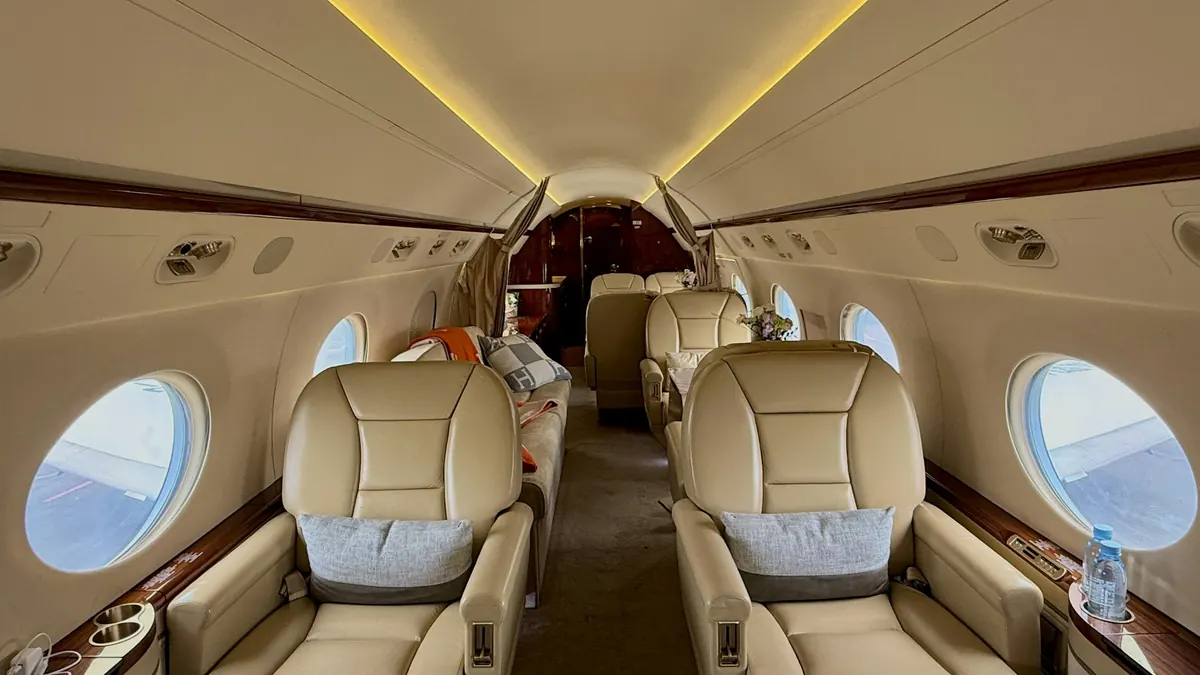
A charter price is built from a specific aircraft, its position on the day, the crew's schedule and the airports at each end. The route alone tells an advisor very little about any of those. The good news is that the details that matter are easy to share, and most take a few seconds to add to a request.
1. The exact airports
Many cities have several airports that handle private flights. New York alone has Teterboro, Westchester, Morristown, Republic and the big commercial airports. The choice changes the drive at each end, the fees, and sometimes the aircraft that can be used. Teterboro, for example, has no airline service and a weight limit set by the operator, while Aspen is a high-elevation mountain airport with seasonal restrictions. If you have a preferred airport, name it. If not, give the town and we will suggest the best fit.
2. Dates and departure times
Exact times matter more than people expect. They decide whether a crew can fly the trip within its legal duty day, whether an aircraft has time to reposition, and whether you land before an airport closes for the night. Peak dates such as holidays, ski weeks and major events also change availability and price. A rough time, such as "morning" or "after 4 pm", is far better than none.
3. One way, round trip or multi-city
A one-way flight often includes the aircraft flying back to base empty, which is part of the price. A round trip over several days may involve the aircraft waiting, flying home in between, or a daily minimum charge. A same-day return is priced differently again. Choosing the trip type in the form, and listing extra legs for multi-city trips, lets your advisor compare these options properly.
4. The number of passengers
Seats decide the category: a light jet usually seats six to eight, a large-cabin jet ten or more. Count everyone who will be on board, including children. If the number might change, say so; it is easier to quote a slightly larger aircraft than to switch late.
5. Bags and sports gear
Baggage space and weight decide more charter trips than cabin size. A light jet has room for soft bags but not much else, while skis, golf clubs and large hard cases may call for a midsize or larger aircraft. Our guide to bags, pets and skis covers this in more detail.
6. Pets
Pets are welcome on many aircraft with the operator's approval. Tell us the number, the size and whether they travel in a carrier. Some operators have limits, and international trips have entry rules for animals.
7. Flexibility
If you can move by a few hours, use a nearby airport or take a different category, say so. Flexibility widens the choice of aircraft and occasionally makes a discounted empty-leg flight possible, though empty legs have a fixed route and time and can be cancelled if the original trip changes.
8. Catering and on-board requests
Most flights include drinks and light snacks. Meals, dietary needs, Wi-Fi for a working flight or a particular cabin layout are worth mentioning early, because they can narrow the aircraft list and add costs that belong in an all-in quote.
9. Ground transport and timing at each end
Cars, a particular private terminal, a tight connection or a meeting time on arrival all shape the plan. They rarely change the aircraft price, but they change which airport and departure time make sense, and that does.
How each detail changes the quote
| Detail | What it affects |
|---|---|
| Exact airports | Fees, drive time, which aircraft can use the runway |
| Dates and times | Crew duty limits, repositioning, peak-day pricing |
| Trip type | Empty return legs, waiting time, daily minimums |
| Passengers | Aircraft category |
| Bags and gear | Category, weight, sometimes a fuel stop |
| Pets | Operator approval, cabin choice |
| Flexibility | Number of options, chance of an empty leg |
| Catering and requests | Aircraft choice and add-on costs |
| Ground plans | Best airport and departure time |
When you don't know everything yet
Plans are rarely complete when the first question comes up. If the dates or the group size are not settled, request a quote with your best guess and say what is still open, such as "four or five passengers" or "returning Sunday or Monday". Your advisor can price the likely version and show how the alternatives change it, which is often exactly what you need to make the decision. It is far easier to refine a quote than to start one from scratch a day before departure.
What you can leave out
You do not need to know aircraft models, tail numbers or operator names. That is the work we do. You also do not need to decide on a category; if you are unsure, leave it to your advisor, who will suggest the sizes that fit and explain the trade-offs.
The quickest way to share all nine
The quote form covers the first four in three short steps. Everything else fits in the notes field in a line or two, for example: "Prefer Westchester, leaving around 9 am, two sets of golf clubs, one small dog, car at Palm Beach." That single sentence often saves a round of emails, and it means the first options you receive are the ones that actually fit. Your advisor will still ask about anything that is missing, but every detail you add up front saves a round of questions later.
Ready to request?
Three short steps. An advisor emails options with an all-in price.